The Science Behind Expired Medications: When the Date on the Label Is Misleading
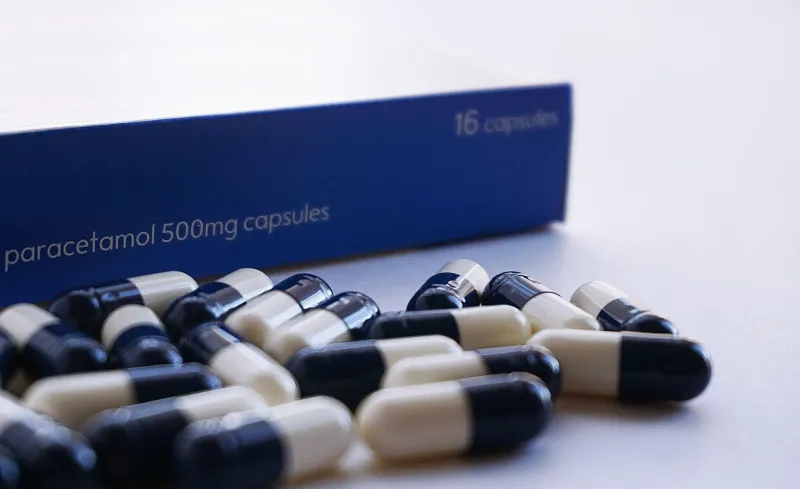
You open the medicine cabinet during a late-night headache, shake out two acetaminophen tablets, and notice the bottle expired fourteen months ago. Do you take them, or do you reach for your coat and drive to the nearest 24-hour pharmacy?
For most Americans, the answer involves some combination of mild anxiety and reluctant disposal. We have been conditioned to treat expiration dates on medication packaging the way we treat expiration dates on raw poultry — as a firm boundary beyond which danger begins. The science, however, tells a considerably more complicated story.
Why Expiration Dates Exist in the First Place
The modern pharmaceutical expiration date is not a discovery born from patient harm. It is, in large part, a regulatory requirement.
In 1979, the U.S. Food and Drug Administration began mandating that all drug manufacturers print expiration dates on their products. The rule was designed to ensure that consumers only use medications whose potency and safety have been formally verified by the manufacturer. The date printed on the label represents the last point at which the manufacturer guarantees — based on stability testing conducted under controlled conditions — that the drug meets its labeled specifications.
Here is the critical nuance: that date reflects when testing stopped, not necessarily when the drug stops working.
Manufacturers conduct stability studies for a defined period, typically two to three years, because that is the commercially practical window aligned with production, distribution, and retail shelf life. Extending those studies for five or ten years would delay product launches and add significant cost. So the expiration date is, in a meaningful sense, a testing endpoint rather than a degradation endpoint.
The Military's Landmark Findings
The most consequential investigation into drug stability beyond labeled expiration dates did not come from an academic laboratory or a pharmaceutical company. It came from the United States military.
Facing the logistical and financial burden of replacing vast stockpiles of medications across military installations worldwide, the Department of Defense partnered with the FDA in 1986 to launch what became known as the Shelf Life Extension Program (SLEP). The program systematically tested hundreds of drug products — stored under appropriate conditions — well past their printed expiration dates to determine whether they remained potent and chemically stable.
The findings were striking. An analysis published in the Journal of Pharmaceutical Sciences evaluating SLEP data found that approximately 88 percent of the tested medications remained stable for an average of more than five years beyond their original expiration dates. Some remained viable for more than a decade.
The implications for civilian medicine are significant. The drugs tested included many common medications — antihistamines, analgesics, certain antibiotics, and cardiovascular drugs. Most retained their labeled potency with minimal chemical degradation when stored correctly.
Which Drugs Actually Become Dangerous After Expiration
The nuanced truth is that expiration risk is not uniform across all drug classes. Some medications do degrade in ways that matter clinically. Others do not.
Medications with genuine post-expiration risk include:
- Liquid formulations, particularly suspensions and solutions. These are more chemically vulnerable than solid tablets and can support microbial growth once opened. Liquid antibiotics, eye drops, and insulin fall into this category.
- Nitroglycerin tablets, used for acute chest pain. These are notoriously volatile and can lose potency rapidly, even within their labeled expiration period, if stored improperly.
- Epinephrine auto-injectors (EpiPens). Studies have shown measurable potency loss in expired epinephrine, which is a serious concern given that these devices are used in life-threatening allergic reactions where a full dose is critical.
- Tetracycline antibiotics. Older literature raised concerns about degraded tetracycline causing kidney damage, though modern formulations are considered more stable. The historical caution remains part of pharmaceutical guidance.
- Biologics and vaccines. These are complex molecular structures that are inherently less stable than small-molecule drugs and should never be used past their expiration dates.
Medications that tend to remain stable well past expiration:
- Solid oral tablets and capsules of common analgesics such as acetaminophen and ibuprofen
- Most antihistamines in tablet form
- Many antihypertensive medications in pill form
- Certain antidepressants and antiepileptics, based on SLEP data
The distinction largely comes down to the drug's molecular complexity, its formulation type, and how it has been stored.
Storage Conditions Matter More Than the Date
One of the most underappreciated variables in medication stability is the environment in which drugs are kept. The expiration date on a bottle assumes the medication has been stored under conditions specified by the manufacturer — typically room temperature, low humidity, and away from direct light.
The bathroom medicine cabinet, despite its ubiquity, is one of the worst possible storage locations. Heat and humidity from showers and baths accelerate chemical degradation in ways that can render a medication less potent well before its printed expiration date. A drug that might retain 95 percent potency after five years in a cool, dry drawer could degrade far more rapidly if stored in a steamy environment.
Conversely, a medication stored optimally — in a cool, dark location with stable temperature and low humidity — may retain its effectiveness significantly longer than the label suggests.
Practical Guidance: When to Use, When to Discard
The goal is not to encourage reckless use of old medications, but to equip readers with the knowledge to make informed, proportionate decisions.
Generally lower concern: Solid tablets of common OTC analgesics, antihistamines, or antacids that are a year or two past expiration and have been stored in a cool, dry place. The risk of reduced potency is real but modest, and the drugs are unlikely to cause harm.
Exercise caution: Any liquid medication, eye drops, or topical preparations past their expiration date. Efficacy and sterility cannot be assumed.
Do not use under any circumstances: Expired epinephrine auto-injectors, expired insulin, expired nitroglycerin, and any medication required for a time-sensitive or life-threatening condition. In these cases, the cost of reduced potency is too high to accept.
When in doubt, ask a pharmacist. This is precisely the kind of question pharmacists are equipped to answer on an individual basis, factoring in the specific drug, the storage history, and the clinical context.
Responsible Disposal of Outdated Medications
For medications you determine are no longer appropriate to keep, proper disposal matters. The FDA recommends using authorized drug take-back programs, many of which operate through local pharmacies and law enforcement agencies. The DEA's National Prescription Drug Take Back Day occurs twice yearly and provides convenient drop-off locations across the country.
Flushing medications down the drain is generally discouraged due to environmental concerns, though the FDA maintains a limited "flush list" for drugs — primarily opioids — where the risk of accidental ingestion or misuse is considered to outweigh the environmental concern.
The expiration date on your medication is a meaningful data point, but it is not the complete picture. Understanding the science behind it allows you to make decisions that are grounded in evidence rather than reflexive caution — and to avoid discarding medications that may still be entirely effective.