Same Pill, Wildly Different Price Tag: The Hidden Forces That Determine What You Pay at the Pharmacy Counter
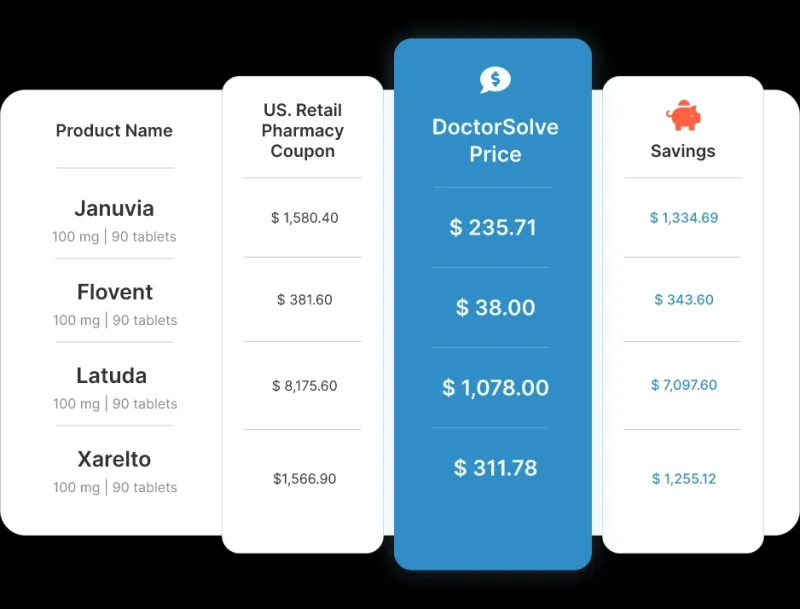
Photo: pharmacy prescription price comparison medication cost, via www.doctorsolve.com
For most Americans, the pharmacy counter is a place of routine transactions — hand over a card, sign a receipt, collect a bag. What rarely gets examined is the pricing machinery humming quietly behind that exchange. The same 30-tablet supply of a widely prescribed medication can carry a $12 price tag at a warehouse retailer and a $180 price tag at a traditional chain pharmacy down the street. Neither figure is arbitrary. Both are the product of a layered, largely opaque pricing system that most patients never see and pharmacies rarely explain.
Understanding how this system works is not merely an academic exercise. It can translate directly into hundreds — sometimes thousands — of dollars saved each year.
The Starting Point: Acquisition Costs Are Not Created Equal
Every pharmacy begins the pricing process by acquiring the drug from a wholesaler or directly from a manufacturer. The price a pharmacy pays for that drug — its acquisition cost — is not standardized. Large retail chains and pharmacy benefit managers (PBMs) negotiate significant volume-based discounts that smaller independent pharmacies cannot access. A major national chain purchasing tens of millions of units annually commands leverage that a single-location independent simply does not have.
This means that before a single markup is applied, two pharmacies in the same zip code may have paid substantially different amounts for the identical product. The pricing gap you see at the register often begins at this wholesale level, long before any retail decision is made.
Markup Strategies and the U&C Price
Once a pharmacy has acquired a drug, it applies its own markup to establish what the industry calls the Usual and Customary (U&C) price — the standard retail price charged to a cash-paying customer without insurance. There is no federal regulation governing how high or how low a pharmacy may set its U&C price. Each retailer exercises considerable discretion.
Chain pharmacies have historically set U&C prices at levels that maximize reimbursements from insurance plans, which often pay based on a percentage of U&C. This creates a structural incentive to keep U&C prices elevated — not to extract money from uninsured patients specifically, but as a byproduct of insurance contracting strategy. The uninsured or underinsured patient who walks in without a discount card simply bears the full weight of that inflated figure.
Warehouse clubs and certain discount retailers operate under a different model. Their pharmacy divisions frequently function as loss leaders — services priced to drive store memberships and foot traffic rather than to generate independent profit. This is why a Costco or Sam's Club pharmacy can routinely offer generic medications at prices that appear almost impossibly low compared to traditional competitors.
Insurance Does Not Always Help — And Sometimes Hurts
It is a common misconception that using insurance guarantees the lowest available price. In many cases, it does not. When a PBM-negotiated copay for a generic drug is $20, but the pharmacy's cash price — or a discount card price — is $9, the patient using insurance actually pays more.
This counterintuitive reality arises because PBMs set copay tiers based on formulary negotiations, not on what a drug actually costs to acquire or dispense. Some pharmacies are contractually prohibited from volunteering the information that a lower cash price exists. The obligation to inform the patient has historically fallen into a legal gray area, though the Inflation Reduction Act and various state transparency laws are beginning to address this.
The practical implication: always ask your pharmacist for the cash price before running your insurance. The answer may surprise you.
GoodRx, Discount Cards, and the Coupon Economy
Discount programs such as GoodRx, RxSaver, and manufacturer-issued coupons have emerged as a direct response to the pricing inconsistencies described above. These programs negotiate their own contracted rates with participating pharmacies — rates that are frequently lower than both the U&C price and the insured copay.
These are not coupons in the traditional consumer sense. They represent pre-negotiated pricing agreements between the discount platform and the pharmacy, with the platform collecting a small fee per transaction. The pharmacy accepts a lower margin in exchange for guaranteed volume and customer acquisition.
Manufacturer copay assistance programs, often called "copay cards," function somewhat differently. Pharmaceutical companies offer these cards to reduce out-of-pocket costs for branded medications — typically those still under patent protection. A brand-name drug that costs $400 per month may carry a copay card that reduces the patient's share to $10 or $25. However, these programs are generally unavailable to patients enrolled in Medicare, Medicaid, or other federal programs, a restriction that disproportionately affects older and lower-income Americans.
Price Comparison Tools Worth Using
Several resources allow patients to compare prices across pharmacies before arriving at the counter:
- GoodRx.com and the GoodRx app provide real-time price comparisons at nearby pharmacies and generate discount codes redeemable at the point of sale.
- NeedyMeds.org maintains a database of patient assistance programs for patients who cannot afford their medications even with discount cards.
- RxAssist.org catalogs manufacturer-sponsored patient assistance programs, particularly useful for specialty and brand-name drugs.
- Cost Plus Drugs (costplusdrugs.com), launched by Mark Cuban, operates on a transparent pricing model — acquisition cost plus a fixed markup plus dispensing fee — and offers dramatically lower prices on a growing formulary of generics.
Using these tools before filling a prescription, rather than after, is the critical distinction. Prices can vary by 1,000% or more for the same drug within a single metropolitan area.
Negotiation: The Conversation Pharmacies Don't Advertise
Many patients are unaware that pharmacy pricing carries a degree of flexibility — particularly at independent pharmacies. A pharmacist or pharmacy manager at an independent location has more discretion than a chain employee operating under corporate pricing mandates. Asking directly — "Is there anything you can do on the price?" or "Do you have a cash pay discount?" — is not an unusual request, and it occasionally yields a meaningful reduction.
For patients managing chronic conditions who fill the same prescriptions monthly, establishing a relationship with an independent pharmacy and discussing pricing openly can produce compounding savings over time. Some independent pharmacies also participate in 340B pricing programs if affiliated with qualifying healthcare entities, which can result in significantly reduced costs for eligible patients.
The Structural Problem Beneath the Surface
The pricing disparities described here are not the result of individual bad actors. They are the predictable output of a system designed around insurance reimbursement optimization, volume-based contracting, and retail competition — a system in which the cash-paying patient, particularly one without the knowledge or resources to navigate discount programs, absorbs the greatest burden.
Legislative and regulatory efforts are gradually introducing more transparency requirements. Several states now mandate that pharmacists proactively inform patients when a lower-cost option is available. Federal legislation has imposed some limits on PBM gag clauses. Progress is incremental.
In the meantime, the most effective tool available to patients is information. Knowing that prices differ, understanding why they differ, and using the comparison and discount resources now widely available can fundamentally change what you pay at the counter — for the exact same medication, at the exact same dose, manufactured by the exact same company.
The pill in the bottle is identical. The price does not have to be.